




Table of Contents Show
Updated: 5 November 2026
Choosing the best countertop card machine for small businesses in the UK can make a significant difference to payment processing costs, customer experience and everyday operations. Whether you operate a retail shop, café, restaurant, salon or independent business, a reliable card payment terminal helps customers pay quickly and securely.
In 2026, UK businesses can choose between traditional countertop card machines, integrated payment terminals and modern all-in-one devices. Providers such as Takepayments, Worldpay, Dojo, Barclaycard, Square and SumUp offer different hardware, pricing structures and payment features.
However, the cheapest machine is not necessarily the most cost-effective option. Transaction charges, monthly rental fees, contract lengths and integration requirements can all influence the total cost.
This guide compares countertop card machines available to UK businesses in 2026, explains their fees and features, and helps small business owners identify the most suitable payment solution.
What Is the Best Countertop Card Machine for Small Businesses in 2026?
The best countertop card machine depends on your business’s monthly card turnover, transaction volume, budget and checkout requirements.
For businesses needing a dedicated fixed terminal, Dojo Wired is worth considering because it is designed for integration with counters and kiosks. Takepayments and Worldpay are also suitable options for businesses seeking traditional merchant payment services.
Meanwhile, Square Terminal offers an accessible all-in-one alternative for independent retailers and cafés, particularly those wanting transparent pricing and integrated point-of-sale features.
Best Countertop Card Machines UK 2026: Quick Comparison
Prices are indicative, based on publicly available provider information reviewed in November 2026. Monthly hardware payments may be rental or financing arrangements, which are not interchangeable. Transaction fees, eligibility conditions and contract terms may differ.
Business owners should request a full written quotation before selecting a payment provider.
What Is a Countertop Card Machine and How Does It Work?
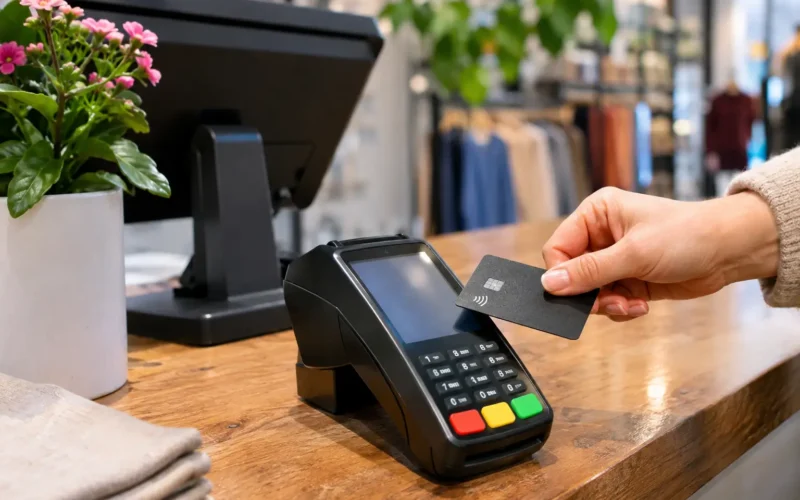
A countertop card machine is a payment terminal designed to accept debit and credit card payments at a fixed checkout location.
Unlike portable machines, which can be carried around a restaurant or shop, traditional countertop terminals generally remain connected to a till, power supply or wired network.
When a customer presents their card or digital wallet, the terminal communicates with the payment processor to request authorisation.
The transaction is checked, approved or declined, and the terminal confirms the result. The merchant then receives the funds according to the provider’s settlement arrangements.
Modern countertop machines commonly support:
- Chip and PIN transactions
- Contactless debit and credit cards
- Apple Pay and Google Pay
- Refunds and transaction reporting
- Digital or printed receipts
- Integration with compatible POS systems
Some devices also support tips, cashback and other functions, depending on the provider and merchant configuration.
A dependable terminal can reduce manual payment handling and improve checkout efficiency, especially during busy trading periods.
Which Companies Offer the Best Countertop Card Machines in the UK?
Several payment providers serve the UK small business market. The following options are worth comparing based on their published product information, hardware features and pricing models.
1. Dojo – Best for Integrated Countertop Payments
 Dojo provides card payment solutions for UK retailers, hospitality businesses and other merchants.
Its Dojo Wired terminal is particularly relevant to businesses seeking a fixed payment device that integrates with compatible counter or kiosk systems.
The terminal is designed for businesses that want payments to form part of a connected checkout process.
Dojo’s published hardware pricing lists Dojo Wired at £179 upfront or £15 per month, although payment processing charges and other contractual conditions must be considered separately.
A fixed integrated terminal can be useful in busy environments because employees may not need to enter the same transaction amount manually into separate systems.
Advantages: Dedicated countertop integration, connected payment workflows and a choice of hardware payment arrangements.
Considerations: Confirm software compatibility, processing charges, minimum commitments and support arrangements before signing.
Best suited for: Retailers, hospitality venues and businesses with established till systems.
Official provider: https://dojo.tech/pricing/
2. Takepayments – Best for Businesses Seeking Tailored Merchant Services
 Takepayments is a UK payment services provider offering card machines and payment processing arrangements for businesses.
Its countertop solutions are intended for merchants that accept payments from a fixed location, including shops, reception desks and service counters.
Unlike providers advertising a single standard processing rate, Takepayments generally provides business-specific quotations.
The overall cost can depend on expected turnover, business type, transaction characteristics and the selected terminal.
Businesses should ask for a complete breakdown of hardware charges, transaction fees, additional services and cancellation conditions.
Advantages: Tailored merchant quotations, traditional card payment solutions and options for different business requirements.
Considerations: Pricing is not always directly comparable without obtaining an individual quotation.
Best suited for: Independent retailers and businesses wanting a conventional merchant services arrangement.
Official provider: https://www.takepayments.com/
3. Worldpay – Best for Established Retail Businesses
 Worldpay is an established payment processing provider offering card acceptance services for businesses of different sizes.
Its payment solutions can support businesses that require in-person transactions alongside broader payment processing services.
For established retailers, the ability to connect payment processing with existing business operations can be an important consideration.
However, businesses should confirm which current Worldpay terminals are available for fixed countertop use, as product ranges and supported integrations can change.
Pricing generally depends on the merchant’s requirements and the agreement offered.
Advantages: Broad payment processing services, merchant support options and solutions for different business sizes.
Considerations: Request details of transaction rates, hardware charges, PCI-related fees, settlement arrangements and contract duration.
Best suited for: Established retailers and growing businesses with more complex payment requirements.
Official provider: https://www.worldpay.com/en
4. Barclaycard – Best for Businesses Seeking Integrated Payment Services
 Barclaycard offers merchant payment acceptance solutions for UK businesses.
Businesses looking for countertop card machines may consider its payment terminal and merchant services options, particularly where integration with existing checkout systems is important.
A merchant services agreement can involve several components, including payment processing, terminal provision and settlement arrangements.
For this reason, business owners should assess the total contract cost rather than comparing only the headline processing percentage.
Advantages: Established merchant payment services and options for businesses with different processing needs.
Considerations: Confirm current terminal availability, compatibility and pricing directly with the provider.
Best suited for: Businesses wanting to explore an established merchant payment provider.
Official provider: https://www.barclaycard.co.uk/business/
5. Square Terminal – Best All-in-One Countertop Alternative
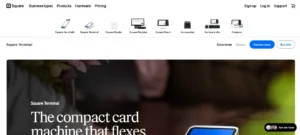 Square Terminal is a modern card payment device that combines payment acceptance, transaction management and receipt printing.
Although it is portable rather than a traditional permanently fixed countertop terminal, it can operate effectively at a shop counter.
This makes it particularly attractive to independent businesses wanting a straightforward payment setup without committing to a conventional terminal rental agreement.
Square advertises its Terminal at £149 plus VAT, with a standard in-person processing fee of 1.75% for UK-issued cards.
The device supports contactless payments, chip and PIN transactions and digital wallets. It can also work with Square’s wider point-of-sale software.
Advantages: Published pricing, integrated receipts, straightforward setup and no mandatory monthly hardware subscription after purchase.
Considerations: The standard processing rate may be less competitive for businesses with substantial monthly card turnover. Optional software and services may have additional costs.
Best suited for: Small retailers, cafés, salons and businesses seeking a simple all-in-one solution.
Official provider: https://squareup.com/gb/en/hardware/terminal
6. SumUp – Best for Flexible, Low-Commitment Card Payments
 SumUp provides card readers, payment terminals and point-of-sale tools for small businesses.
Its Terminal and other standalone devices can be used at a counter, although they are not necessarily direct replacements for traditional wired countertop machines.
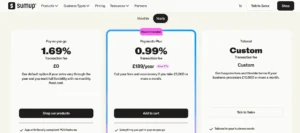
SumUp’s pay-as-you-go plan advertises a standard 1.69% transaction fee, with no monthly subscription charge.
Its Payments Plus option costs £19 per month and offers a 0.99% rate on eligible domestic card transactions. Other card categories can attract different rates.
This gives businesses a choice between a flexible plan with no fixed subscription and a paid plan designed for higher transaction volumes.
Advantages: Transparent standard fees, flexible payment options and straightforward setup.
Considerations: Compare the subscription cost against expected monthly savings, and check the applicable rates for international and premium cards.
Best suited for: Start-ups, independent shops and businesses with fluctuating monthly sales.
Official provider: https://www.sumup.com/en-gb/pricing/
How Much Does a Countertop Card Machine Cost in the UK?
The total cost of a countertop card machine generally consists of hardware charges, payment processing fees and any additional merchant service costs.
Some providers sell devices outright, while others offer rental arrangements, financing or bundled merchant contracts.
A business should consider the following expenses before choosing a machine.
For example, a retailer purchasing a Square Terminal for £149 plus VAT would also pay the applicable processing charges on card transactions.
A business renting a Dojo Wired terminal would need to include the monthly hardware payment alongside its agreed merchant processing fees.
The most important figure is the total cost of accepting payments over 12 months, rather than the advertised price of the device alone.
Businesses should also check whether quoted hardware prices include VAT.
Which Countertop Card Machine Has the Lowest Transaction Fees?
There is no single cheapest card machine for every UK small business.
The lowest-cost provider depends on the number of transactions, average payment value, card types accepted and monthly turnover.
For example, Square’s standard UK in-person rate is 1.75%, while SumUp’s standard pay-as-you-go rate is 1.69%.
SumUp also offers an eligible domestic-card rate of 0.99% through its £19 monthly Payments Plus plan.
Example: Monthly Card Processing Costs
The following comparison assumes all payments qualify for the specified UK domestic-card rate.
These are illustrative calculations based on the stated rates, not provider quotations. They exclude hardware costs, VAT on applicable services, chargebacks and other fees. The SumUp Plus calculation assumes every transaction qualifies for the 0.99% domestic-card rate.
A business processing £10,000 in qualifying monthly card sales would pay approximately £169 under SumUp’s standard rate, compared with £118 under its monthly Payments Plus plan.
That represents a potential difference of £51 per month before other costs.
However, a provider offering negotiated processing rates may be more economical for businesses with higher transaction volumes.
For that reason, comparing at least three written quotations is advisable.
Should Small Businesses Buy or Rent a Countertop Card Machine?
Buying and renting both have advantages, depending on the business’s budget and long-term requirements.
Buying a Card Machine
Purchasing a terminal can be attractive to businesses wanting to avoid ongoing hardware rental payments.
A purchased device may also be suitable for start-ups that prefer flexible processing arrangements without a long-term rental commitment.
However, ownership does not necessarily mean the terminal can be used with any payment processor. Some devices are tied to a particular provider’s software or payment services.
Business owners should confirm compatibility before purchasing.
Renting a Card Machine
Renting can reduce the initial hardware expense and may provide access to replacement equipment or support under the agreement.
This can be useful for businesses that want predictable monthly hardware costs.
Nevertheless, rental agreements can involve minimum contract periods, equipment return requirements and early termination charges.
Before signing, compare the total rental cost over the agreement’s full duration against the cost of purchasing a compatible device.
What Is the Difference Between Countertop, Portable and Mobile Card Machines?
Understanding the different types of card payment terminals helps businesses choose equipment that suits their daily operations.
Traditional countertop machines are especially useful when customers pay at a single checkout location.
Portable terminals are more appropriate for restaurants where employees take payments at tables.
Mobile card machines are designed for businesses that accept payments away from their premises, such as market traders, tradespeople and delivery services.
Modern all-in-one terminals can overlap these categories, so the precise device specification matters more than the marketing label.
How Can Small Businesses Choose the Right Countertop Card Machine?
Selecting the right terminal requires more than finding the lowest advertised transaction rate.
Business owners should consider how customers pay, how frequently transactions occur and whether the terminal needs to connect with other business software.
Consider Your Monthly Card Turnover
A new business accepting only a few thousand pounds in monthly card payments may benefit from a pay-as-you-go arrangement.
Businesses processing larger volumes may find that negotiated merchant rates or paid subscription plans offer better overall value.
Review at least three months of actual card sales where possible.
Check POS System Compatibility
A compatible payment terminal can reduce the need for manual transaction entry and help keep checkout records consistent.
Retailers using inventory management or integrated tills should confirm that the proposed card machine supports their existing software.
This is particularly important when replacing an established payment system.
Review Contract Terms Carefully
Check whether the agreement includes minimum monthly charges, PCI-related fees, terminal rental costs or cancellation penalties.
Also ask whether processing rates can change during the contract and what happens when the agreement expires.
Consider Customer Experience
Customers generally expect quick and convenient payment options.
A reliable machine should support common card types, contactless transactions and mobile wallets.
Businesses should also assess receipt options, accessibility, connectivity and the availability of technical support.
Are Countertop Card Machines Safe for UK Businesses?
Modern card payment terminals use security technologies designed to protect payment information during transactions.
However, no payment device should be considered completely immune to fraud or cyberattacks.
Businesses should choose supported terminals, install required software updates and follow the security guidance supplied by their payment provider.
The Payment Card Industry Data Security Standard, commonly known as PCI DSS, establishes requirements for protecting payment account data.
The PCI Security Standards Council provides information about these requirements.
Small businesses should also secure their networks, restrict access to payment systems and inspect physical terminals for signs of tampering.
Using a wired connection does not automatically make a card machine secure. Security depends on the device, software, configuration, network and operating practices.
How Can Countertop Card Machines Improve Small Business Operations?
A suitable countertop card machine can support faster payment handling and more efficient business administration.
For a busy retail shop, integrating payments with the till can reduce duplicate data entry and improve transaction accuracy.
For cafés and restaurants, reliable card acceptance helps staff manage customer payments during peak periods.
Digital reporting tools can also make it easier to review daily sales, reconcile transactions and identify payment discrepancies.
Some payment providers offer additional features such as inventory management, sales analytics and integration with accounting software.
These features may help growing businesses manage their operations more effectively.
Nevertheless, the value of additional software should be weighed against any subscription fees.
A business should select the features it genuinely needs rather than paying for tools that will rarely be used.
Which Countertop Card Machine Should Your Business Choose in 2026?
The best countertop card machine for a UK small business is one that provides reliable payments, suitable features and manageable overall costs.
For retailers needing fixed POS integration, Dojo Wired and suitable traditional merchant terminals deserve consideration. Businesses wanting tailored merchant services can also request quotations from Takepayments, Worldpay and Barclaycard.
Square Terminal is a practical alternative for smaller businesses seeking published pricing and integrated payment features. SumUp may appeal to businesses wanting flexible processing plans without mandatory monthly subscriptions.
Before choosing a provider, compare the full 12-month cost, review the agreement and check that the terminal supports your business’s existing systems.
A reliable countertop card machine should do more than accept payments. It should make checkout easier, support business operations and provide good value as the company grows.
What Are the Most Frequently Asked Questions About Countertop Card Machines?
What Is the Best Countertop Card Machine for a Small UK Shop?
Dojo Wired is worth comparing for fixed integrated payments, while Square Terminal offers an all-in-one alternative. The best choice depends on turnover, fees and POS compatibility.
How Much Does a Countertop Card Machine Cost in the UK?
Costs vary by provider. Some devices are purchased outright, while others involve monthly rental or financing payments. Processing fees are usually charged separately.
Can I Get a Countertop Card Machine Without Monthly Fees?
Yes. Some purchased terminals operate on pay-as-you-go processing plans without mandatory monthly hardware subscriptions, although transaction charges still apply.
Which Card Machine Has the Lowest Transaction Fees?
There is no universal cheapest option. Published rates vary, and negotiated pricing may be available depending on turnover, card types and contract terms.
Do Countertop Card Machines Need an Internet Connection?
Most modern terminals require network connectivity for normal payment authorisation, although some support limited offline functionality subject to specific conditions.
Can Countertop Card Machines Accept Apple Pay and Google Pay?
Many modern contactless terminals support Apple Pay and Google Pay, provided the relevant payment methods are enabled and supported by the provider.
Is It Better to Buy or Rent a Countertop Card Machine?
Buying can reduce long-term hardware rental expenses, while renting may lower initial costs. Compare total fees, support arrangements and contract commitments before deciding.