



Table of Contents Show
Last Updated: September 2026
Finding the best Japanese restaurant London has to offer is no longer simply a question of where to get sushi.
London’s Japanese food scene now ranges from specialist ramen counters and Osaka-style okonomiyaki restaurants to contemporary robata dining and intimate omakase experiences where the chef determines the progression of the meal.
That variety creates a problem for diners. A restaurant that is ideal for a £20 weekday lunch may be completely wrong for someone planning a special anniversary dinner. Likewise, a highly regarded sushi counter will not necessarily suit a group in which half the table would prefer cooked food.
This updated 2026 guide therefore looks beyond restaurant names and rankings. It compares what each restaurant actually specialises in, the type of experience it offers, who it suits and what diners should consider before going.
If you are exploring London’s wider Asian dining scene as well as Japanese food, our guide to Asian restaurants in London is another useful starting point.
10 Japanese Restaurants in London at a Glance
Menus, prices and opening arrangements change, particularly at restaurants using seasonal seafood. Check directly with the restaurant before travelling.
1. Abeno – Best for Okonomiyaki in Central London
Address: 47 Museum Street, London WC1A 1LY
Cuisine: Kansai-style Japanese cooking
Best for: Okonomiyaki and diners looking beyond sushi
Website: https://www.abeno.co.uk/
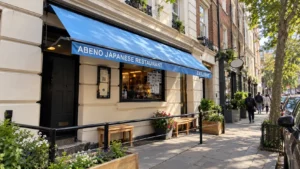
Abeno is one of the most distinctive restaurants on this list because sushi and ramen are not its main attraction.
Its speciality is okonomiyaki, the savoury Japanese dish particularly associated with Osaka and the wider Kansai region. Abeno describes itself as Europe’s first specialist okonomiyaki restaurant and says the family-run business has operated since 1993.
That longevity is significant because specialist restaurants help diners understand that Japanese cuisine is considerably broader than the dishes most commonly exported overseas.
At Abeno, choosing fillings and toppings is part of the experience. Its current information also says its three okonomiyaki choices can be made gluten-free if required, with vegetarian versions available.
The practical point is that Abeno makes more sense when you specifically want okonomiyaki rather than when a group wants an enormous menu covering every category of Japanese cooking.
Another useful detail is booking. Abeno currently directs customers to call the restaurant for reservations, so this is one place where checking the booking procedure before arriving is worthwhile.
Why Choose Abeno?
Choose Abeno when you want your Japanese meal to teach you something new. It is particularly suitable for someone who has eaten plenty of sushi, ramen and katsu curry but has never explored Osaka-style cooking.
2. Machiya – Best for Japanese Comfort Food
Address: 5 Panton Street, London SW1Y 4DL
Cuisine: Japanese home-style and comfort food
Best for: Casual central London dining
Website: https://www.machi-ya.co.uk/
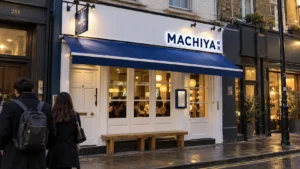 Machiya is useful when you want Japanese food but do not particularly want raw fish.
Its menu is built around the kind of dishes that demonstrate how broad everyday Japanese cooking can be. Tonkatsu, Japanese curry and donburi are among its core offerings, alongside smaller plates and Japanese-inspired desserts.
The restaurant describes its approach as simple home-style cooking and takes its name from the traditional townhouses associated with Kyoto. Current restaurant information also highlights ingredients such as Uji matcha and seasonal flavours including yuzu in its desserts.
This makes Machiya an approachable choice for first-time Japanese diners.
Someone hesitant about sashimi can order tonkatsu or curry, while a more adventurous diner can combine smaller dishes to explore different flavours.
Location is another advantage. Panton Street sits between the Leicester Square and Piccadilly Circus areas, making Machiya practical before a West End show or during a day in central London.
Why Choose Machiya?
Choose it when your priority is Japanese comfort food rather than sushi theatre.
It also works particularly well for groups containing people with different levels of familiarity with Japanese cuisine.
3. Kanada-Ya – Best for Tonkotsu Ramen
Address: 64 St Giles High Street, London WC2H 8LE
Cuisine: Ramen
Best for: A focused lunch or casual dinner
Website: https://www.kanada-ya.com/
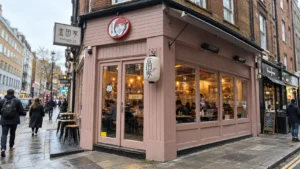 Kanada-Ya is a useful example of why choosing a specialist can sometimes be better than choosing the Japanese restaurant with the largest menu.
The company specialises in tonkotsu ramen, the pork-bone-broth style associated with Fukuoka. Its London operation now includes locations in Covent Garden/St Giles, Angel, Piccadilly, Carnaby, Ealing and Westfield.
The St Giles restaurant puts you close to Tottenham Court Road and Covent Garden.
What should first-time visitors pay attention to?
Not simply the toppings.
A good ramen bowl is a combination of broth, seasoning, noodles, aromatic oils and toppings. Tonkotsu is characterised by a rich pork-bone broth, so diners expecting something similar to a light noodle soup may be surprised by its depth and richness.
Kanada-Ya also gives diners a useful opportunity to compare ramen styles and variations rather than treating ramen as one standard dish.
Why Choose Kanada-Ya?
Choose Kanada-Ya when the reason for going out is specifically ramen.
A specialist ramen bar is often more appropriate for a quick lunch or informal evening meal than a large Japanese restaurant designed around sushi, cocktails and sharing plates.
4. Sanjugo – Best for Groups With Different Tastes
London locations: Angel, Shoreditch and Victoria
Cuisine: Sushi, sashimi and izakaya-style Japanese food
Best for: Groups and mixed preferences
Website: https://sanjugo.co.uk/
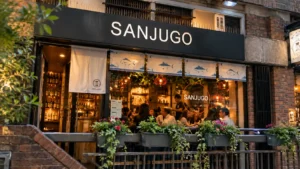 Sanjugo solves a problem that is easy to overlook when recommending restaurants: groups rarely want exactly the same thing.
One diner might want sashimi. Another might prefer a rice bowl. Someone else may want cooked meat or tempura.
Sanjugo describes itself as an authentic Japanese experience influenced by the welcoming atmosphere of an izakaya. It currently operates restaurants in Shoreditch, Angel and Victoria.
That multi-location setup is useful in London because diners do not necessarily need to cross the city for the same restaurant concept.
Its broader approach also makes it easier to build a shared meal. Instead of committing the entire table to ramen or a fixed omakase progression, people can explore different categories.
Why Choose Sanjugo?
Choose Sanjugo when flexibility matters more than specialisation.
It can be particularly useful for birthday dinners, groups of colleagues or friends where some people want sushi while others prefer cooked Japanese dishes.
5. ROKA Charlotte Street – Best for Robata and Sharing
Address: 37 Charlotte Street, London W1T 1RR
Cuisine: Contemporary Japanese robatayaki
Best for: Sharing, dates and celebrations
Website: https://www.rokarestaurant.com/
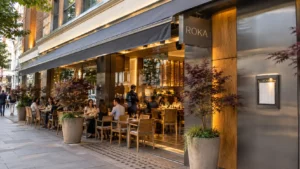 ROKA provides another way to experience Japanese food without making sushi the entire focus of dinner.
The first ROKA opened on Charlotte Street in 2004 with the robata grill at the centre of the restaurant, and the brand describes its food as contemporary Japanese robatayaki cuisine.
Robatayaki centres on grilling, and that changes the structure of the meal.
Instead of everyone ordering an individual bowl of noodles, a table can combine grilled meat, fish and vegetables with sashimi, maki, tempura, dumplings and rice dishes.
Current Charlotte Street menu examples include tiger prawn tempura, salmon and avocado maki, rice hot pot with Japanese mushrooms and a selection of other small and larger dishes.
The restaurant’s sharing format makes it particularly suited to a longer evening.
It is worth watching the budget, however. Ordering several plates, premium robata dishes, cocktails and desserts can push the cost well above a casual ramen or donburi meal.
Why Choose ROKA?
ROKA makes sense when sharing food is part of the occasion.
For a quick bowl of noodles, it would be unnecessarily elaborate. For a birthday, date or relaxed group dinner where the table wants to try several dishes, the format works much better.
6. MARU – Best for a Structured Omakase Dinner
Address: 18 Shepherd Market, London W1J 7QH
Cuisine: Omakase
Best for: Special occasions and experienced Japanese-food diners
Website: https://www.marulondon.com/
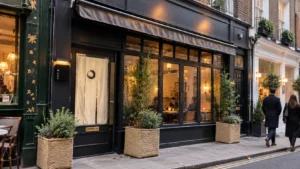 MARU is where this guide moves into a fundamentally different type of Japanese restaurant.
This is not a place where the main decision is whether to order salmon or tuna rolls.
The focus is omakase.
In practical terms, omakase places much of the meal in the chef’s hands. Courses arrive in a deliberate sequence rather than diners constructing the entire meal themselves.
That distinction matters because the experience requires more commitment. Diners should check dietary restrictions, allergies, pricing, cancellation terms and the length of the meal before booking.
MARU is in Shepherd Market, Mayfair, and Michelin’s current London Japanese restaurant selection includes the restaurant in its premium ££££ category.
Why Choose MARU?
Choose MARU when the restaurant experience itself is the occasion.
It is much less appropriate when you simply want a spontaneous Japanese dinner or when members of the group have significantly different food preferences.
7. Sushi Kanesaka – Best for Luxury Edomae-Style Sushi
Address: 45 Park Lane, London W1K 1PN
Cuisine: Japanese sushi and omakase
Best for: High-end sushi and milestone occasions
Website: https://www.dorchestercollection.com/london/45-park-lane/dining/sushi-kanesakaSushi Kanesaka at 45 Park Lane
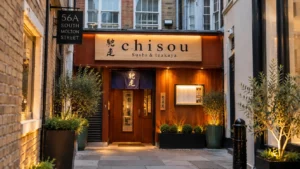 Sushi Kanesaka represents the luxury end of London’s Japanese dining spectrum.
Chef Shinji Kanesaka’s London restaurant opened in 2023 and is connected to the wider Kanesaka group, whose roots are in Japan. The group currently identifies the London restaurant among its international locations.
The restaurant is located inside 45 Park Lane.
Michelin describes the experience as Japanese sushi dining centred around an omakase menu, with counter seating and a strong emphasis on traditional details.
The restaurant’s own 45 Park Lane page currently lists two dinner sittings from Tuesday to Saturday and warns that the menu cannot necessarily be modified to accommodate individual needs because dishes depend on daily ingredient availability.
That is important information.
A premium restaurant is not automatically the right restaurant for every special occasion. If someone in the group has dietary restrictions, establishing whether those can be accommodated should happen before booking.
Why Choose Sushi Kanesaka?
Choose it when sushi craftsmanship itself is the reason for dinner.
This is very different from selecting a broad Japanese restaurant where sushi is simply one section of a long menu.
8. Kurisu Omakase – Best for an Intimate Brixton Omakase
Kurisu Omakase
Address: 58D Atlantic Road, Brixton, London SW9 8PY
Cuisine: Omakase sushi
Best for: Intimate special occasions and sushi enthusiasts
Website/booking: https://www.sevenrooms.com/explore/kurisuomakase/reservations/create/search/
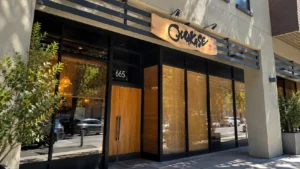 Kurisu Omakase is interesting partly because of where it is.
Premium omakase in London is often associated with Mayfair, luxury hotels and the West End. Kurisu brings an intimate chef-led sushi experience to Atlantic Road in Brixton.
Current local listings identify the restaurant as a small sushi-focused omakase experience, while its reservation arrangements are handled through SevenRooms.
That makes Kurisu particularly relevant to south London diners who want a specialist experience without automatically heading to Mayfair.
Small omakase restaurants also require a different approach from ordinary casual dining. Limited seating means availability can matter considerably, and diners should understand cancellation conditions before reserving.
Why Choose Kurisu Omakase?
Choose Kurisu when you want a small, chef-led experience rather than a large luxury dining room.
Its Brixton location also demonstrates how London’s serious Japanese dining scene has expanded beyond its traditional central-London luxury districts.
9. OKAN – Best for Casual Osaka-Style Dining
Cuisine: Okonomiyaki and izakaya-style dishes
Best for: Casual Japanese food and sharing
Website: https://www.okanlondon.com/
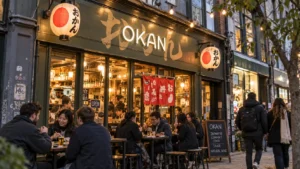 OKAN is another restaurant that helps correct the idea that Japanese dining in London revolves entirely around sushi.
Its own description focuses on okonomiyaki and izakaya tapas, giving diners a route into Osaka-inspired food and informal Japanese sharing dishes.
That makes it particularly useful for people who have already tried ramen and sushi and want to explore another part of Japanese cooking.
Okonomiyaki is also a good example of why comparing restaurants by cuisine alone can be misleading. A specialist okonomiyaki restaurant and a premium omakase counter are both “Japanese restaurants”, but the experiences have almost nothing in common.
Abeno or OKAN?
If okonomiyaki is the priority, both deserve consideration.
Abeno has a long specialist history dating to the 1990s, while OKAN offers an Osaka-inspired casual concept that combines okonomiyaki with izakaya-style dishes.
The better choice therefore depends on whether you want a highly focused specialist experience or a more informal sharing meal.
10. Hot Stone London – Best for Sushi and Premium Beef
Address: 3 Windmill Street, London W1T 2HY
Cuisine: Contemporary Japanese
Best for: Sushi, premium beef and central London dinners
Website: https://hotstonelondon.com/
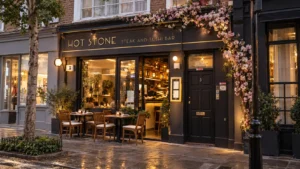 Hot Stone is useful for diners who want something more flexible than omakase but more occasion-focused than a quick ramen bar.
Its Fitzrovia restaurant currently emphasises sushi, Japanese wasabi and premium beef, including certified Kobe beef prepared using an Ishiyaki hot-stone method.
The restaurant says the beef is cooked on a volcanic stone heated to 450°C and that its Japanese wasabi is freshly grated rather than simply relying on the prepared wasabi commonly encountered in casual restaurants.
That creates an interesting option for a table where one diner is primarily interested in sushi while another is more interested in Japanese beef.
The Windmill Street location is also convenient for Fitzrovia, Soho and Tottenham Court Road.
Why Choose Hot Stone?
Choose it when you want a premium Japanese dinner while retaining control over what you order.
That flexibility separates it from fixed or chef-led omakase experiences.
Which Japanese Restaurant in London Should You Choose?
The most useful way to choose is not by asking which restaurant is universally “best”.
Start with what you actually want to eat.
This approach is much more useful than comparing restaurants purely by star ratings.
A five-star ramen bar and a five-star omakase counter are trying to provide completely different experiences.
Japanese Food in London Is More Than Sushi
One of the easiest ways to discover better Japanese restaurants is to stop treating “Japanese food” and “sushi” as interchangeable terms.
Ramen
Ramen combines noodles, broth, seasoning, aromatic oils and toppings.
Tonkotsu is a rich pork-bone style associated particularly with Fukuoka and Kyushu, but it is only one branch of Japan’s enormous ramen culture.
Okonomiyaki
Okonomiyaki is a savoury dish strongly associated with Osaka and Hiroshima, although the regional preparation styles differ.
Restaurants such as Abeno and OKAN make this category accessible in London.
Donburi
Donburi centres on rice served in a bowl with meat, fish, vegetables or other toppings.
It can be an excellent introduction to Japanese food for someone uncomfortable with raw seafood.
Robatayaki
Robata cooking revolves around grilling.
Restaurants such as ROKA demonstrate why a Japanese meal can focus as much on charcoal-grilled meat, fish and vegetables as sushi.
Izakaya
An izakaya meal often works particularly well socially because diners can combine smaller dishes.
Instead of thinking in terms of one starter and one main course per person, the table can share several items.
Omakase
Omakase changes who controls the meal.
Instead of choosing every dish yourself, you trust the chef to determine much of the progression according to the restaurant’s format and available ingredients.
What Can £20, £50 and £200+ Buy at a Japanese Restaurant in London?
The term “Japanese restaurant” tells you surprisingly little about price.
Around £20
This is where ramen, donburi, curry and other focused casual meals become particularly relevant.
A specialist ramen restaurant can therefore provide a genuine Japanese dining experience without the cost associated with premium sushi.
Around £50
The options become much broader.
Depending on drinks and service, diners can start combining sushi, sashimi, smaller plates, tempura, grilled dishes or several shared items at a mid-range restaurant.
£100+
Premium sushi, wagyu and elaborate contemporary Japanese dinners become increasingly relevant.
The final spend can rise quickly once cocktails, sake and discretionary service are included.
£200+
This is where some of London’s high-end omakase experiences sit.
The difference is not simply that more food appears on the table. Limited counter seating, ingredient sourcing, preparation, chef interaction and a carefully controlled sequence all contribute to the experience.
Is an Expensive Japanese Restaurant Always Better?
No. Price becomes a poor comparison when the restaurant formats are fundamentally different.
A carefully prepared bowl of tonkotsu ramen can fulfil its purpose perfectly without resembling a luxury omakase dinner.
Likewise, spending hundreds of pounds on sushi does not make sense if what you actually want is curry, ramen or a relaxed evening sharing plates with friends.
A more useful question is:
Does the restaurant specialise in the experience I want?
That one question can eliminate many unsuitable choices.
What Should You Check Before Booking Omakase in London?
Omakase deserves more preparation than an ordinary restaurant booking.
Check the restaurant’s dietary policy first.
Because the chef controls the menu and ingredients may be prepared in advance, substitutions can be considerably harder than at an à la carte restaurant.
Sushi Kanesaka, for example, explicitly says its changing menu cannot be modified to suit individual requirements.
Also check the cancellation policy, seating time, expected duration and whether payment or a deposit is required in advance.
Finally, make sure everyone actually wants omakase.
It is an expensive way to discover that one member of the group dislikes raw seafood.
Where Should First-Time Japanese Food Diners Start?
Someone completely new to Japanese food does not need to begin with sashimi.
Japanese curry, tonkatsu, donburi and ramen can provide much more familiar textures while still introducing Japanese flavours and cooking styles.
Machiya is particularly useful for this reason.
A second visit could explore ramen at Kanada-Ya, followed later by okonomiyaki at Abeno or OKAN.
Sushi can then become another part of the journey rather than the definition of Japanese food itself.
Readers specifically interested in sushi can also explore London Local News’ guide to all-you-can-eat sushi in London for a different type of sushi dining experience.
Does Location Matter When Choosing a Japanese Restaurant?
More than many restaurant lists acknowledge.
London is large enough that travelling across the city can add an hour or more to an evening.
Someone near Brixton interested in omakase should at least investigate Kurisu before automatically travelling to Mayfair. Likewise, someone already around Tottenham Court Road has Kanada-Ya, ROKA Charlotte Street and Hot Stone within the wider central area.
Sanjugo’s multiple London locations provide additional flexibility.
The growth of Japanese restaurants outside a single central cluster means diners can increasingly choose by both speciality and geography.
How Can You Tell Whether a Japanese Restaurant Is Worth Trying?
Online ratings provide one signal, but they should not be the only one.
Look at the menu before looking at photographs.
A focused menu can reveal what the kitchen actually considers important.
Next, check whether the restaurant clearly explains its speciality. A ramen specialist should tell you something about its broth and noodles. An omakase restaurant should explain its booking format and dietary policy. An okonomiyaki restaurant should make that speciality central rather than hiding it among dozens of unrelated dishes.
Finally, consider whether the restaurant fits the occasion.
A tiny counter may be brilliant for two people but completely inappropriate for a birthday group of 12.
Final Thoughts
Finding the right Japanese restaurant London offers becomes much easier once you stop looking for a restaurant that is supposedly perfect for everybody.
Want ramen? Start with a ramen specialist such as Kanada-Ya.
Want to discover something beyond sushi? Try the okonomiyaki at Abeno or OKAN or explore Japanese comfort food at Machiya.
Planning a social dinner? Sanjugo’s broad menu or ROKA’s sharing-focused robata format may fit the occasion better.
And if the meal itself is the event, restaurants such as MARU, Sushi Kanesaka and Kurisu Omakase introduce the chef-led world of omakase at very different London locations.
The interesting thing about Japanese dining in London in 2026 is therefore not simply the number of restaurants.
It is the range of specialities now available.
Ramen, okonomiyaki, robatayaki, donburi, izakaya dining, sushi and omakase all provide different ways into Japanese food culture.
Instead of asking only “What is the best Japanese restaurant in London?”, decide what you want from the meal first.
That is usually the fastest route to the restaurant that actually suits you.
Frequently Asked Questions
What Is the Best Japanese Restaurant in London for Ramen?
Kanada-Ya is one of the city’s established specialist options for tonkotsu ramen and currently operates several London locations. Its St Giles restaurant is particularly convenient for Covent Garden and Tottenham Court Road.
Where Can I Eat Japanese Food in London That Isn’t Sushi?
Try Abeno or OKAN for okonomiyaki, Machiya for Japanese curry, tonkatsu and home-style dishes, Kanada-Ya for ramen or ROKA for robata cooking.
Which Japanese Restaurant Is Suitable for a Group?
Sanjugo and ROKA are useful starting points because their broader menus allow diners to choose across several categories rather than committing the whole group to ramen or omakase.
Where Can I Try Okonomiyaki in London?
Abeno on Museum Street specialises in okonomiyaki and has operated since 1993, while OKAN offers okonomiyaki alongside izakaya-style dishes.
Where Can I Find Japanese Restaurants Outside Mayfair?
The restaurants in this guide demonstrate how geographically diverse London’s Japanese scene has become. Options include Abeno in Bloomsbury, Kurisu in Brixton, Sanjugo in Angel and Shoreditch, OKAN south of the Thames, and Kanada-Ya across several areas.
Is Japanese Food in London Expensive?
It can be, but it does not have to be. Ramen, curry and rice bowls can provide relatively affordable meals, while premium sushi and omakase can cost well over £100 or £200 per person.
What Is Omakase?
Omakase is a chef-led dining format in which diners allow the chef to determine much of the sequence of dishes. It is particularly associated with sushi restaurants, although exact formats vary.
Should I Book Japanese Restaurants in London in Advance?
For premium omakase and small sushi counters, advance planning is sensible because seating may be extremely limited. Casual restaurants vary, so check the restaurant’s current booking policy before travelling.